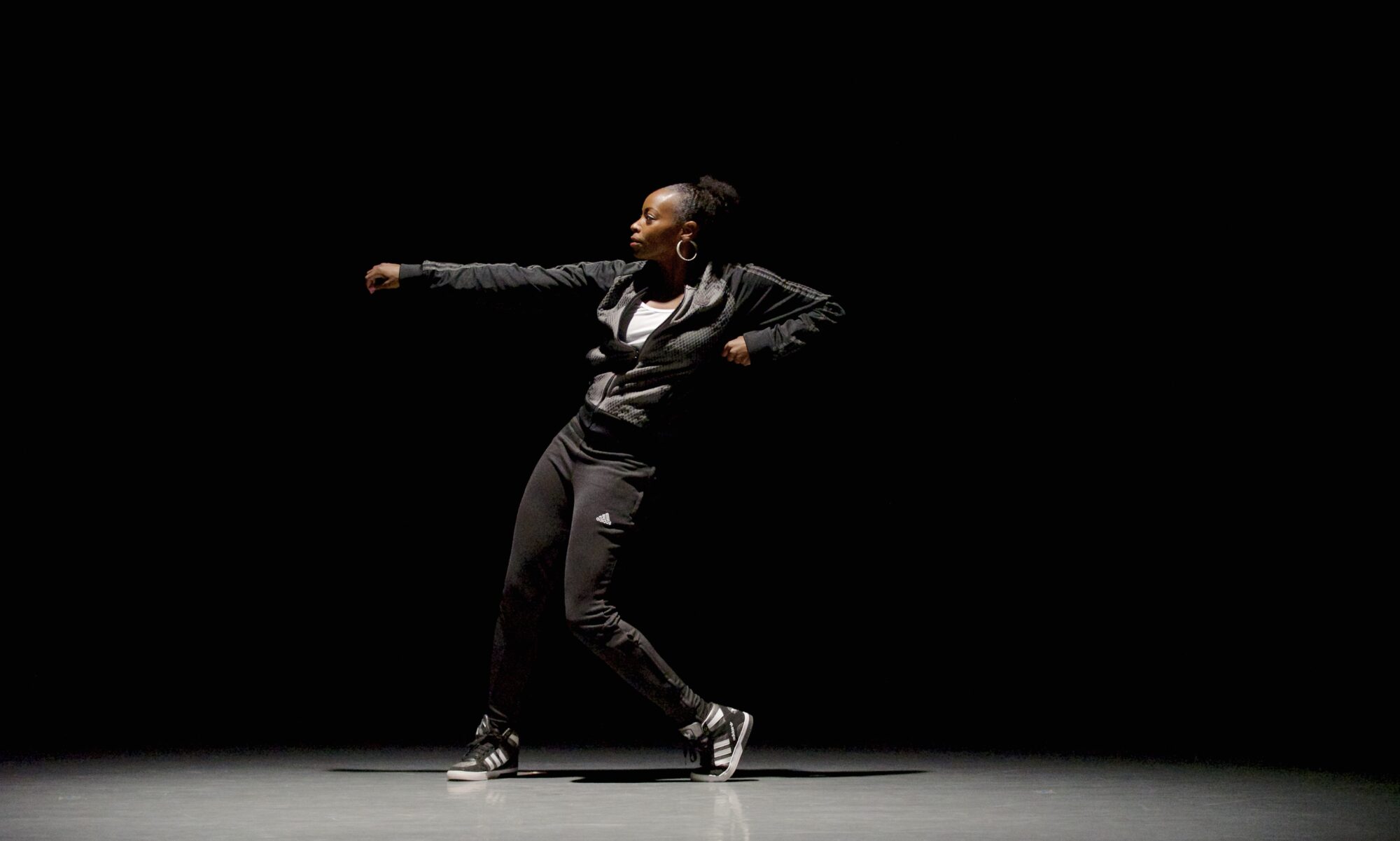
Black Woman Part I (2019-2021)
Black Woman Part I is a deeply personal solo work that celebrates the power, beauty, and complexity of Black womanhood. The piece begins in a circle, an intentional, sacred space, where I honor the skin I’m in, embracing my identity without apology and rejecting the societal pressures that try to define or diminish me. It is a declaration of self love, confidence, and joy in my Blackness and femininity. As I step outside the circle and into the gaze of the audience, the work shifts: I confront, claim, and assert my presence, unafraid to take up space and speak through movement. The final return to the circle is a release from external validation. I am grounded not by the audience, but by the powerful artifacts that surround me, symbols of my lineage, ancestors, my mentors, and my past. Each object, whether a garment, a piece of jewelry, or a photo, shapes the way I move, guiding my freestyle with memory, reverence, and spirit. Black Woman Part I is both a tribute and a testimony, and a living conversation between myself, my history, and my embodied legacy.
MAY 4 | HUT XXIV
SATURDAY, MAY 4 8PM TICKETS: $10 GENERAL ADMISSION
STUDIO4: 25 MAIN ST, NORTHAMPTON, MA
PERFORMANCE X3
Linda Aubry • Music
IZIKHOTANE • Words
Shakia Johnson • Movement
Black Woman Part II
Black Woman, Part II is a continuation and deepening of the journey begun in Part I, this time shifting from self affirmation to reckoning. In this chapter, the work moves through the emotional terrain of discovery, anger, and resilience as I confront the historical truths and ancestral legacies that were hidden or denied to me for so long. Realizing how much of my history was kept from me as a child, and processing the weight of that knowledge in real time. Unlike the first part, where presence and ritual grounded the experience, Part II is driven by movement as visceral response. Each gesture becomes an outlet for frustration, confusion, and grief, while also serving as a tool for healing and resistance. I am navigating my place in the world. I am unsettled but empowered, and questioning but determined. The dance becomes a necessary release, a confrontation with the past, and a commitment to move forward with deeper awareness and unshakable strength.